
Cognitive Resonance: Why Your AI-Powered Marketing Feels 'Off' to Customers and How to Fix It
Published on November 26, 2025
Cognitive Resonance: Why Your AI-Powered Marketing Feels 'Off' to Customers and How to Fix It
You’ve invested heavily in a sophisticated AI-powered marketing stack. Your dashboards are alight with metrics, your automation sequences are firing on all cylinders, and your personalization engines are churning out unique experiences for every user. On paper, you’re executing a flawless, data-driven strategy. Yet, something is fundamentally wrong. Engagement is plateauing, customer churn is subtly ticking upward, and the feedback you do get contains unsettling words like “creepy,” “irrelevant,” or simply “generic.” Your marketing, despite its technological prowess, feels hollow. It feels 'off'.
This disconnect is a growing epidemic in the digital marketing world. It’s a phenomenon we can call ‘customer dissonance,’ and its root cause lies in the failure to achieve **cognitive resonance in AI marketing**. While we chase the holy grail of hyper-personalization and efficiency, we often neglect the profoundly human element of connection. We've become so focused on what the data says a customer *might* want that we've forgotten to ask if the interaction *feels* right. The result is a fractured customer experience where the brand's actions, powered by cold logic, clash with the customer's emotions, expectations, and sense of self.
This comprehensive guide will dissect this critical issue. We will explore the psychological underpinnings of cognitive resonance, identify the clear warning signs that your AI strategy is backfiring, and, most importantly, provide a practical, five-step framework to realign your technology with your customers. It’s time to move beyond automation that merely speaks *at* people and build an AI-driven ecosystem that truly resonates *with* them.
Understanding Cognitive Resonance in the Age of AI
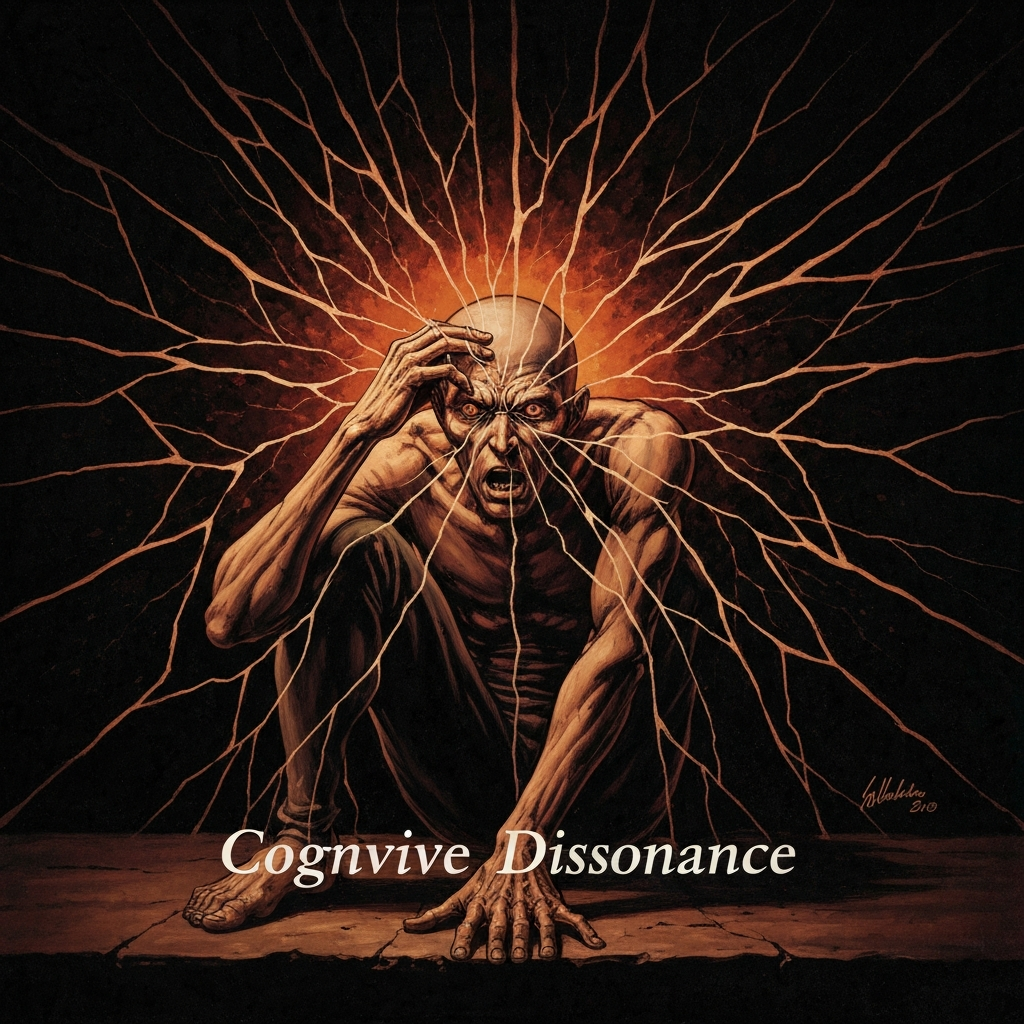
To fix the problem, we must first define it. The term ‘cognitive resonance’ is the positive counterpart to the well-known psychological principle of ‘cognitive dissonance.’ Coined by psychologist Leon Festinger, cognitive dissonance is the mental discomfort experienced by a person who holds two or more contradictory beliefs, ideas, or values, or is confronted by new information that conflicts with existing beliefs. In marketing, this often happens when a brand’s promise doesn’t match its actions, leaving the customer feeling confused or even deceived.
Cognitive resonance, therefore, is the state of harmony achieved when a brand’s communication and actions align perfectly with a customer's needs, values, expectations, and self-identity. It’s the feeling of being truly seen and understood. When marketing achieves cognitive resonance, the customer thinks, “Yes, this brand *gets* me.” This is the bedrock of trust, loyalty, and genuine brand advocacy.
Artificial intelligence, with its immense processing power, should theoretically be the ultimate tool for creating resonance. It can analyze vast datasets to understand behavior, predict needs, and deliver personalized messages at the perfect moment. However, the paradox of modern AI marketing is that its pursuit of logical perfection often creates emotional dissonance. The algorithms optimize for clicks, conversions, and transactions, but they struggle to optimize for trust, empathy, and belonging.
The Uncanny Valley of Hyper-Personalization
One of the most common ways AI creates dissonance is by plunging the customer into the “uncanny valley” of marketing. This concept, borrowed from robotics and CGI, describes the point where something looks and acts almost, but not perfectly, like a human, causing a feeling of unease or revulsion. In marketing, this happens when personalization becomes too specific, too invasive, or too presumptive.
Consider these examples:
- An ad for a highly specific medical condition appears in your social feed moments after a private conversation about it.
- An email uses your name in every other sentence, attempting a familiar tone that feels forced and robotic.
- A product recommendation is based on a single, accidental click on an item completely outside your usual interests, yet it follows you across the internet for weeks.
These instances don't make the customer feel understood; they make them feel surveilled. The AI has correctly identified a data point, but it has failed to understand the human context surrounding it. It has crossed the line from helpful to intrusive, shattering the illusion of a natural, helpful brand relationship and creating immediate dissonance. As an external study from McKinsey notes, customers value personalization but have a low tolerance for 'creepy' experiences that feel like an invasion of privacy.
When Automation Clashes with Brand Voice
Another significant source of dissonance is the erosion of a distinct brand voice. Your brand personality—be it witty, authoritative, nurturing, or irreverent—is a crucial component of your relationship with your audience. It sets expectations and builds a consistent, recognizable identity. However, many AI content generation and automation tools are, by default, generic. They are trained on vast, averaged-out datasets, and their output often reflects that neutrality.
When a customer who loves your brand's quirky and personal email newsletters suddenly receives a bland, formulaic message from an AI-powered chatbot or an automated support ticket response, it creates a jarring experience. The communication lacks the expected personality and warmth. This inconsistency makes the brand feel less like a trusted entity and more like a faceless corporation. The automated message may have solved the immediate query, but it has damaged the long-term emotional connection by failing to resonate with the established brand identity.
5 Signs Your AI Strategy is Creating Customer Dissonance
How can you tell if your sophisticated AI engine is pushing customers away instead of drawing them closer? The warning signs are often subtle at first, buried in your analytics or anecdotal feedback. Here are five key indicators that your AI-powered marketing is causing dissonance.
Sign 1: Engagement Metrics Are Dropping
This may seem counterintuitive. AI is supposed to boost engagement. However, you need to look at the *quality* of the engagement, not just the quantity. Your email open rates might be high because of an AI-optimized subject line, but are people clicking through? Are they replying? Are they converting? Similarly, your social media posts might get a lot of automated impressions, but are you seeing meaningful comments and shares, or is it a digital ghost town? A drop in high-intent actions—like time spent on page, repeat visits, and conversion rates—is a red flag. It suggests your content is grabbing attention but failing to hold it because it lacks substance and genuine value, a classic symptom of cognitive dissonance where the promise (a catchy headline) doesn't match the reality (generic content).
Sign 2: Customers Complain About 'Creepy' Targeting
This is one of the most direct and damaging signs. If you’re seeing feedback—in reviews, support tickets, or social media comments—that uses words like “creepy,” “intrusive,” or “how did you know that?,” you have a serious problem. This feedback indicates your personalization has crossed the uncanny valley. It means your AI is using data in a way that feels like a violation of privacy rather than a helpful service. The goal of AI personalization is to make customers feel uniquely served, not constantly monitored. Pay close attention to this qualitative feedback; it’s a goldmine of information about where your AI is misaligned with customer expectations.
Sign 3: Your Messaging Lacks Context and Empathy
An AI model might send a cheerful promotional email for a luxury vacation to a customer who just requested a refund for a faulty product. It might push baby products to someone who recently suffered a miscarriage. These are extreme but real examples of AI’s failure to grasp human context and empathy. The AI operates on isolated data points (purchase history, browsing behavior) without a holistic view of the customer's current situation or emotional state. This kind of tone-deaf automation is incredibly damaging. It doesn't just feel 'off'; it feels deeply insensitive and can permanently sever a customer relationship. True empathetic AI marketing requires integrating data from multiple sources, including customer service interactions, to build a more complete and compassionate customer profile.
Sign 4: The Customer Journey Feels Fractured
You have an AI for your chatbot, another for email marketing, a third for product recommendations on your website, and a fourth for social media ads. While each might be optimized for its specific channel, do they work together to create a seamless experience? Often, the answer is no. A customer might have a detailed conversation with a chatbot, only to have to repeat all the information when they are transferred to a human agent. They might receive an email promoting a product they just purchased. This fractured journey is a hallmark of siloed AI systems. It creates immense frustration and dissonance because the brand appears disorganized and forgetful, failing to recognize the customer as a single individual moving across different touchpoints. For more on this, you might review academic research on Festinger's original theory to understand the psychological friction it causes.
Sign 5: Your Team Is Over-reliant on AI Recommendations
The final sign is an internal one. Observe how your marketing team interacts with your AI tools. Are they blindly accepting every recommendation the AI makes? Do they launch campaigns without a critical review because “the AI said so”? This over-reliance can stifle creativity, critical thinking, and brand stewardship. The marketing team’s intuition, experience, and deep understanding of the brand’s ethos are invaluable. When AI is treated as an infallible oracle rather than a powerful assistant, the human element that creates resonance is lost. The team's role should be to guide, interpret, and, when necessary, override the AI to ensure its output aligns with the brand’s strategic and emotional goals.
A Practical Framework to Fix Your AI Marketing
Recognizing the problem is the first step. Realigning your strategy to foster cognitive resonance requires a deliberate and human-centric approach. Here is a five-step framework to get your AI marketing back on track.
Step 1: Audit AI Touchpoints for Human Value
You cannot fix what you don't measure. Begin with a comprehensive audit of every single touchpoint where AI interacts with your customers. Map the entire customer journey, from initial awareness to post-purchase support, and identify where automation and personalization are in play.
For each touchpoint, ask critical questions:
- **What is the goal of this AI interaction?** (e.g., increase efficiency, provide a recommendation, answer a query).
- **What is the customer's goal at this moment?** (e.g., get a quick answer, discover new products, feel valued).
- **Does the AI's action add genuine human value, or does it just serve a business metric?** A helpful product recommendation adds value; a repetitive, irrelevant ad detracts from it.
- **How could this interaction be more empathetic, contextual, and respectful?**
Create a “Resonance Scorecard” to rate each touchpoint. This audit will reveal the specific areas where your AI is creating dissonance and provide a clear roadmap for improvement.
Step 2: Implement a 'Human-in-the-Loop' (HITL) Workflow
The solution to robotic marketing isn't to abandon AI, but to integrate human intelligence more thoughtfully. A Human-in-the-Loop (HITL) model creates checkpoints where a human expert reviews, refines, or approves the AI's output before it reaches the customer. This is crucial for tasks requiring nuance, creativity, and brand alignment.
Examples of HITL workflows include:
- **Content:** An AI generates ten potential email subject lines, and a human copywriter selects the best one and refines it to match the brand's voice.
- **Segmentation:** An AI algorithm proposes a new customer segment for a high-value campaign, and a marketing strategist reviews the logic to ensure it makes strategic sense and isn't based on potentially biased data.
- **Chatbots:** When an AI chatbot cannot resolve a complex or emotionally charged issue, it seamlessly escalates the conversation to a human agent who has the full context of the interaction.
By implementing HITL, you get the best of both worlds: the scale and speed of AI, guided by the wisdom and empathy of your team. To learn more about this approach, read our guide on implementing human-centric AI.
Step 3: Prioritize Transparency in Data Usage
The feeling of being surveilled is a primary driver of dissonance. You can combat this by being radically transparent about how you collect and use customer data. Vague privacy policies buried in your website's footer are no longer sufficient. Instead, build trust through clear, concise, and easily accessible information.
Strategies for transparency include:
- **Just-in-Time Explanations:** When asking for data, briefly explain why you need it. For example, next to a request for a birthday, add: “(So we can send you a special gift!)”.
- **Personalization Controls:** Give customers control over their data. Create a user-friendly preference center where they can easily choose what kind of information they receive and how their data is used for recommendations.
- **Honest Cookie Banners:** Instead of using deceptive design patterns, create banners that clearly explain what you're tracking and provide a simple, one-click option to opt out.
Transparency transforms the dynamic from covert tracking to a collaborative partnership, where customers willingly share data because they see a clear value exchange and trust that you will use it responsibly. This aligns with regulations like GDPR, which emphasize user consent and data transparency. A report by Gartner emphasizes that privacy is now a key factor in consumer buying decisions.
Step 4: Use AI to Augment Human Creativity, Not Replace It
Shift your team's mindset from seeing AI as an autonomous creator to viewing it as an incredibly powerful creative assistant. AI excels at analyzing patterns, processing data, and generating variations at a scale no human could ever match. Use these capabilities to supercharge your team's creative process.
Leverage AI for:
- **Audience Insight:** Use AI to analyze customer reviews, social media comments, and support tickets to identify emerging trends, pain points, and sentiment. Your team can then use these insights to create more relevant and resonant campaigns.
- **Ideation:** Ask a generative AI to brainstorm 50 different blog post titles or campaign slogans based on a specific theme. This breaks through creative blocks and provides raw material for your team to refine.
- **A/B Testing:** Use AI to rapidly test hundreds of variations of an ad creative or landing page layout to find the optimal combination, freeing up your team to focus on the core strategic message.
In this model, AI handles the heavy lifting of data analysis and iteration, while humans focus on the uniquely human tasks of strategy, storytelling, and emotional connection.
Step 5: Create a Robust Feedback Loop
Your customers are the ultimate arbiters of whether your marketing resonates. You must create systematic, ongoing channels to listen to their feedback and feed it back into your AI models. This goes beyond traditional annual surveys.
Implement a multi-channel feedback system:
- **Post-Interaction Surveys:** After a customer interacts with your AI chatbot or receives a personalized recommendation, trigger a simple, one-question survey: “Was this helpful?” or “Did this recommendation feel relevant to you?”
- **Sentiment Analysis:** Use AI tools to monitor social media and review sites for mentions of your brand. Analyze the sentiment to catch issues of dissonance early.
- **Customer Service Intel:** Your customer service team is on the front lines. Hold regular meetings between the marketing and support teams to discuss common complaints and feedback related to your automated communications. This qualitative data is invaluable for fine-tuning your AI.
By continuously collecting and analyzing this feedback, you can train your AI models to become more empathetic, contextual, and resonant over time, creating a system of constant improvement.
Case Study: How Artisan Threads Aligned Its AI with Customer Expectations
Let's consider a fictional example. Artisan Threads, a direct-to-consumer brand specializing in ethically sourced, sustainable apparel, invested in a state-of-the-art AI recommendation engine. The goal was to increase the average order value by cross-selling relevant products. Initially, the AI worked on a purely behavioral algorithm, recommending products that other customers had frequently purchased together.
However, they soon noticed a problem. The AI was recommending their few non-organic cotton items alongside their premium, GOTS-certified organic linen shirts. While this made sense from a purely stylistic, data-driven perspective, it created cognitive dissonance for their core customers, who valued sustainability above all else. Feedback started trickling in: “Why are you recommending a fast-fashion-style t-shirt to me? I shop here for the eco-friendly options.”
Applying the framework, Artisan Threads first conducted an audit and identified this key point of dissonance. They then implemented a HITL solution. Their data science team re-engineered the algorithm to include a “sustainability score” for each product. Now, the AI’s recommendations were weighted not just by popularity but also by ethical and environmental alignment. Furthermore, a human merchandiser reviewed the top 20 AI-generated product pairings each week to ensure they told a coherent brand story. They were empowered to override suggestions that didn't feel authentic. Finally, they added a small link under recommendations: “Why this suggestion? It’s based on our shared commitment to sustainable style.” This small act of transparency transformed the interaction. The result was a 15% increase in AOV and a significant rise in positive customer feedback mentioning the brand’s