
Leveraging AI-Powered Chatbots for Lead Generation
Published on November 26, 2025
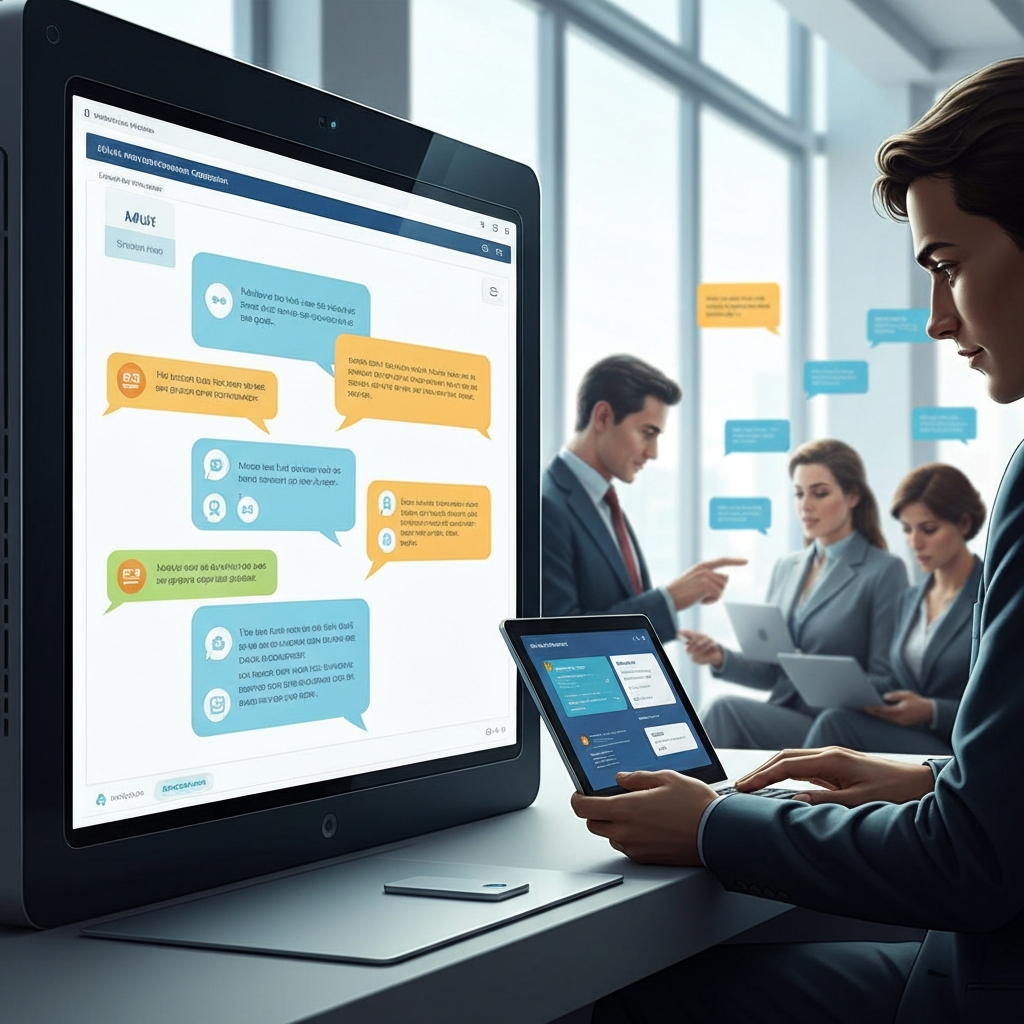
Leveraging AI-Powered Chatbots for Lead Generation
In today's fiercely competitive digital landscape, capturing and nurturing leads is the lifeblood of any business. The challenge, however, is not just attracting website visitors, but converting them into qualified prospects efficiently and at scale. This is where the strategic implementation of AI chatbots for lead generation transforms the game. For marketing managers, small business owners, and sales professionals, the constant struggle to improve conversion rates, filter out low-quality inquiries, and engage prospects around the clock can be overwhelming. Traditional methods like static contact forms and delayed email follow-ups are no longer sufficient to meet the expectations of the modern buyer, who demands instant gratification and personalized interactions.
This comprehensive guide delves into the world of conversational marketing, demonstrating how you can leverage sophisticated AI-powered chatbots to not just automate lead capture, but to create a seamless, engaging, and highly effective lead generation engine. We will explore actionable strategies, essential features to look for in a chatbot platform, and a step-by-step process for implementation. By the end of this article, you will understand how a well-designed lead generation chatbot can become your most valuable team member, working 24/7 to qualify leads, schedule appointments, and ultimately, drive significant revenue growth for your business. It's time to move beyond passive lead collection and embrace a proactive, conversational approach that meets your customers where they are, whenever they are ready to engage.
The Problem with Traditional Lead Generation (And How Chatbots Solve It)
For decades, the standard playbook for digital lead generation has been remarkably consistent: drive traffic to a landing page and hope visitors fill out a static contact form. While this method isn't entirely obsolete, it's riddled with inefficiencies and friction points that cause businesses to lose a substantial number of potential customers. These traditional methods create a passive and often frustrating user experience, leading to significant lead leakage and a high cost per acquisition.
One of the most significant issues is the delay in response time. A study highlighted by Harvard Business Review found that companies that tried to contact potential customers within an hour of receiving a query were nearly seven times as likely to have a meaningful conversation with a key decision-maker as those that waited even an hour longer. With static forms, leads often sit in an inbox for hours, or even days, before a sales representative follows up. By that time, the prospect's interest may have waned, or worse, they've already been contacted by a more responsive competitor. This delay is a conversion killer.
Furthermore, traditional forms are impersonal and demanding. A long form asking for a name, email, phone number, company size, job title, and specific needs can be incredibly intimidating. This leads to high form abandonment rates, where a visitor who was initially interested decides the effort isn't worth it and simply leaves the page. They offer no immediate value in exchange for the user's sensitive information. The interaction is one-sided and transactional, failing to build any rapport or trust.
AI-powered chatbots directly address these critical pain points. They represent a paradigm shift from a passive, one-way communication channel to an active, two-way conversation. Here’s how they solve the core problems:
- Instantaneous Engagement: A lead generation chatbot engages visitors the moment they land on your site. There is no waiting period. This immediate interaction capitalizes on peak interest, providing answers and guidance in real-time, 24/7. Whether it's 3 PM on a Tuesday or 3 AM on a Sunday, the chatbot is there to ensure no lead is ever missed.
- Frictionless Data Collection: Instead of presenting a daunting form, a chatbot collects information conversationally, one piece at a time. Asking for a name, then an email, then a company name within a natural dialogue feels less intrusive and more like a helpful conversation. This drastically reduces the psychological barrier to providing information, significantly lowering abandonment rates.
- Automated Qualification: Not all leads are created equal. Sales teams often waste countless hours chasing down unqualified prospects. An AI chatbot can be programmed with specific qualification criteria (e.g., budget, company size, role, specific needs). It asks targeted questions to sift through visitors, identifying and flagging the high-quality, sales-ready leads, allowing your human team to focus only on the most promising opportunities. This creates a highly efficient lead qualification filter that works tirelessly.
By transforming lead capture from a static, impersonal process into a dynamic, interactive experience, AI chatbots not only increase the quantity of leads but also dramatically improve their quality, setting the stage for a more efficient and effective sales cycle.
7 Actionable Ways to Use AI Chatbots for Lead Generation
Implementing an AI chatbot is not just about adding a new widget to your website; it's about strategically deploying a powerful tool to engage, qualify, and convert visitors. Here are seven concrete, actionable ways to use AI chatbots for explosive lead generation.
1. Engage Visitors Proactively and 24/7
Your website is your digital storefront, and you wouldn't ignore a customer who walked into your physical store. Yet, most websites let visitors browse and leave without a single interaction. Proactive chatbots change this. Instead of waiting for a visitor to find the contact page, the chatbot can initiate a conversation with a tailored message based on their behavior. For example, a visitor spending time on your pricing page could be greeted with, "Hi there! I see you're looking at our pricing plans. Can I help you find the right fit for your team?" This proactive engagement can significantly reduce bounce rates. Crucially, this happens 24/7/365. The global nature of business means leads can come from any time zone. A chatbot ensures that a potential customer in London visiting your US-based site at midnight their time receives the same instant, helpful engagement as a local customer during business hours. This constant availability means you never miss an opportunity to capture a lead simply because your team was offline.
2. Automate Lead Qualification with Targeted Questions
One of the most powerful applications of a lead generation chatbot is its ability to serve as a tireless sales development representative (SDR). You can program your chatbot with a script that mirrors your initial qualification process. By asking a series of targeted questions, the chatbot can determine if a visitor is a good fit for your product or service. This process often follows frameworks like BANT (Budget, Authority, Need, Timeline). The chatbot can ask questions like:
- "To help me recommend the right solution, could you share the approximate number of employees at your company?"
- "Are you the primary decision-maker for this type of purchase?"
- "What is the biggest challenge you're hoping to solve?"
- "What is your ideal timeline for implementation?"
Based on the answers, the chatbot can use conditional logic to score the lead. High-scoring, sales-ready leads can be immediately routed to a live sales agent or have a meeting booked, while lower-scoring leads can be added to a nurturing sequence. This automation frees up your sales team from time-consuming initial discovery calls, allowing them to focus exclusively on closing high-potential deals.
3. Schedule Demos and Appointments Automatically
The back-and-forth email chain to schedule a demo or meeting is a major point of friction in the sales process. It introduces delays and can lead to prospects losing interest. An AI chatbot can eliminate this friction entirely by integrating directly with your sales team's calendars (e.g., Google Calendar, Calendly, Microsoft 365). After a chatbot qualifies a lead, it can offer to book a meeting right within the chat window. The conversation might go: "It sounds like our Pro Plan would be a great fit for you. A 15-minute demo with one of our specialists could be really helpful. Are you free to connect tomorrow at 2 PM or 4 PM?" The user can select a time that works for them, and the appointment is automatically created on both calendars. This seamless process shortens the sales cycle and improves the customer experience dramatically, moving an interested prospect from initial inquiry to a scheduled meeting in minutes.
4. Personalize User Journeys in Real-Time
Modern AI chatbots are capable of more than just following a rigid script. They can leverage data to deliver highly personalized experiences. A chatbot can identify a visitor's location, the source they came from (e.g., a specific Google Ad campaign), or the pages they've viewed on your site. This information can be used to tailor the conversation in real-time. For instance, a returning visitor could be greeted with, "Welcome back! Last time you were looking at our enterprise solutions. Would you like to pick up where you left off?" A visitor arriving from a campaign about a specific feature could be engaged with a conversation focused entirely on that feature's benefits. This level of personalization makes the visitor feel understood and valued, increasing their likelihood of converting into a lead. For more on personalization strategies, HubSpot provides excellent examples of how it can be applied across marketing channels.
5. Capture Leads Through Interactive Content
Traditional lead magnets like eBooks and whitepapers often require users to fill out a form before they get the content. Chatbots can make this process more engaging and interactive. Instead of a static form, a chatbot can deliver the content through a conversation. For example, you could offer a free ROI calculator directly within the chatbot. The bot would ask for the necessary inputs (e.g., current monthly spend, team size) one by one and then deliver the calculated ROI. To send the detailed report, it would then ask for an email address. This method provides immediate value to the user before asking for their contact information, building trust and increasing the conversion rate. Other interactive formats like quizzes, assessments, or guided product tours can also be delivered conversationally, turning passive content consumption into an active lead generation opportunity.
6. Integrate with Your CRM for Seamless Data Transfer
A chatbot is most powerful when it's a fully integrated part of your marketing and sales technology stack. A lead captured by a chatbot should not live in isolation. By integrating your chatbot directly with your Customer Relationship Management (CRM) platform (like Salesforce, HubSpot, or Zoho), all the data collected during the conversation—contact details, qualification answers, pain points, and even the full chat transcript—is automatically passed to the CRM. This creates a new contact record or updates an existing one in real-time. This seamless data transfer eliminates manual data entry, reduces the risk of human error, and provides your sales team with a rich context for their follow-up conversations. When a sales rep calls a lead, they already have a complete history of their interaction, allowing for a much warmer and more effective conversation.
7. Reduce Form Abandonment Rates
Long, multi-field forms are a primary cause of conversion friction. Users are often short on time and hesitant to share a lot of information at once. Chatbots solve this by breaking the process down into a simple, step-by-step conversation. Asking for one piece of information at a time is psychologically less demanding and keeps the user engaged. The conversational interface feels more like a friendly chat than a formal interrogation. If a user stops responding midway through, the chatbot can even be programmed with a gentle nudge, like "Are you still there? Just one more question to go!" This guided, interactive approach to data collection is proven to outperform traditional web forms, helping you capture leads from visitors who would have otherwise abandoned the process.
Key Features to Look for in a Lead Generation Chatbot
The market for AI chatbot platforms is vast and growing. When selecting a tool for chatbot lead generation, it's crucial to look beyond the basic chat interface and evaluate the features that will truly drive results. Here are the essential capabilities to prioritize.
Lead Qualification Logic
This is arguably the most important feature for a lead generation chatbot. The platform should offer sophisticated tools for building conversational flows with conditional logic. This means you can create branching paths in the conversation based on user responses. For example, if a user indicates their company has over 500 employees, the bot should be able to route them down a path designed for enterprise clients. Look for features like lead scoring, where points are assigned to answers, and the ability to set qualification thresholds that automatically trigger actions like booking a meeting or notifying a sales rep.
CRM Integration Capabilities
As mentioned earlier, seamless integration with your existing tech stack is non-negotiable. Your chosen chatbot platform should offer native, one-click integrations with major CRM systems like Salesforce, HubSpot, Zoho CRM, and others. For any systems without a native integration, it should support connections via a third-party service like Zapier. A deep integration ensures that lead data, including contact properties, conversation history, and lead source, is automatically and accurately synced, providing a single source of truth for your sales and marketing teams. This automation is key to scaling your lead generation services effectively.
Customization and Branding
Your chatbot is an extension of your brand, and it should look and feel that way. A good platform will provide extensive customization options. This includes changing the chatbot's colors, fonts, and avatar to match your website's design. More importantly, it should allow you to customize the chatbot's tone and personality. You should be able to craft scripts that align with your brand voice, whether it's formal and professional or friendly and humorous. This consistency is vital for creating a cohesive and trustworthy user experience. A generic, unbranded bot can feel jarring and untrustworthy to visitors.
Analytics and Reporting
You can't optimize what you can't measure. A robust lead generation chatbot platform must include a powerful analytics dashboard. This dashboard should provide clear insights into key performance indicators (KPIs). At a minimum, you should be able to track:
- Number of conversations: How many times visitors are engaging with your bot.
- Leads generated: The total number of qualified leads captured.
- Conversion rate: The percentage of conversations that result in a lead.
- Most common questions: Insights into what your visitors are most interested in.
- Drop-off points: Identifying where in the conversation users are abandoning the chat, so you can optimize the flow.
These analytics are crucial for A/B testing different scripts, proactive triggers, and conversation paths to continuously improve your chatbot's performance and ROI.
Step-by-Step: Setting Up Your First Lead Generation Chatbot
Deploying an effective chatbot involves more than just activating a piece of software. It requires a thoughtful strategy and a clear process. Here is a step-by-step guide to get you started.
- Define Your Goals and KPIs: What do you want your chatbot to achieve? Is the primary goal to generate more Marketing Qualified Leads (MQLs), book more sales demos, or simply answer common questions to free up your support team? Be specific. A clear goal could be: "Increase the number of qualified demos booked through the website by 20% in the next quarter." Define the key metrics you will use to measure success.
- Choose the Right Platform: Based on the key features discussed above (qualification logic, integrations, customization, analytics), evaluate different chatbot providers. Consider factors like ease of use (do you need a no-code, drag-and-drop builder?), scalability, and pricing. Popular options range from simple rule-based bots to advanced AI and NLP-driven platforms.
- Map Out Your Conversation Flow: Before you write a single line of script, map out the entire conversation on a flowchart. Think about the user's journey. Start with a compelling opening, determine the key qualifying questions you need to ask, and plan for different branches based on user responses. Plan for an escape hatch—a clear and easy way for users to request to speak with a human agent at any point.
- Write Your Script (The Playbook): Now, write the actual dialogue for your chatbot. Keep the language clear, concise, and human. Avoid jargon. Use your brand's voice and personality. Break down complex questions into simpler ones. Use buttons and quick replies to make it easy for users to respond without typing. Craft every word carefully to guide the user towards your goal.
- Integrate with Your Tech Stack: Connect the chatbot to your essential tools. The most critical integration is with your CRM. Set up the field mapping to ensure data like name, email, company, and qualification answers are passed correctly. Also, connect it to your team's calendar for automated meeting scheduling and to your email marketing platform to trigger lead nurturing sequences.
- Test Thoroughly: Never launch a chatbot without rigorous testing. Go through every possible conversation path yourself. Check for typos, broken logic, and dead ends. Ask colleagues from different departments to interact with the bot and provide feedback. Testing ensures a smooth and professional user experience from day one.
- Deploy, Monitor, and Iterate: Once you're confident, deploy the chatbot on your website. But the work doesn't stop there. Continuously monitor its performance using the analytics dashboard. Are people engaging with it? Where are they dropping off? Use these insights to A/B test different greetings, questions, and offers to constantly optimize its conversion rate. A chatbot is not a 'set it and forget it' tool; it's a dynamic asset that requires ongoing refinement.
Common Mistakes to Avoid with Your Chatbot Strategy
While AI chatbots offer immense potential, a poorly executed strategy can do more harm than good, frustrating visitors and damaging your brand. Here are some common pitfalls to avoid:
- Hiding the Human Handoff: One of the biggest user frustrations is being trapped in a loop with a bot that can't understand their query. Always provide a clear and easily accessible option to connect with a live human agent. This