
The Commoditization of Creativity: How Generative AI Is Driving Down the Market Value of Creative Services and What Agencies Can Do to Survive.
Published on December 16, 2025
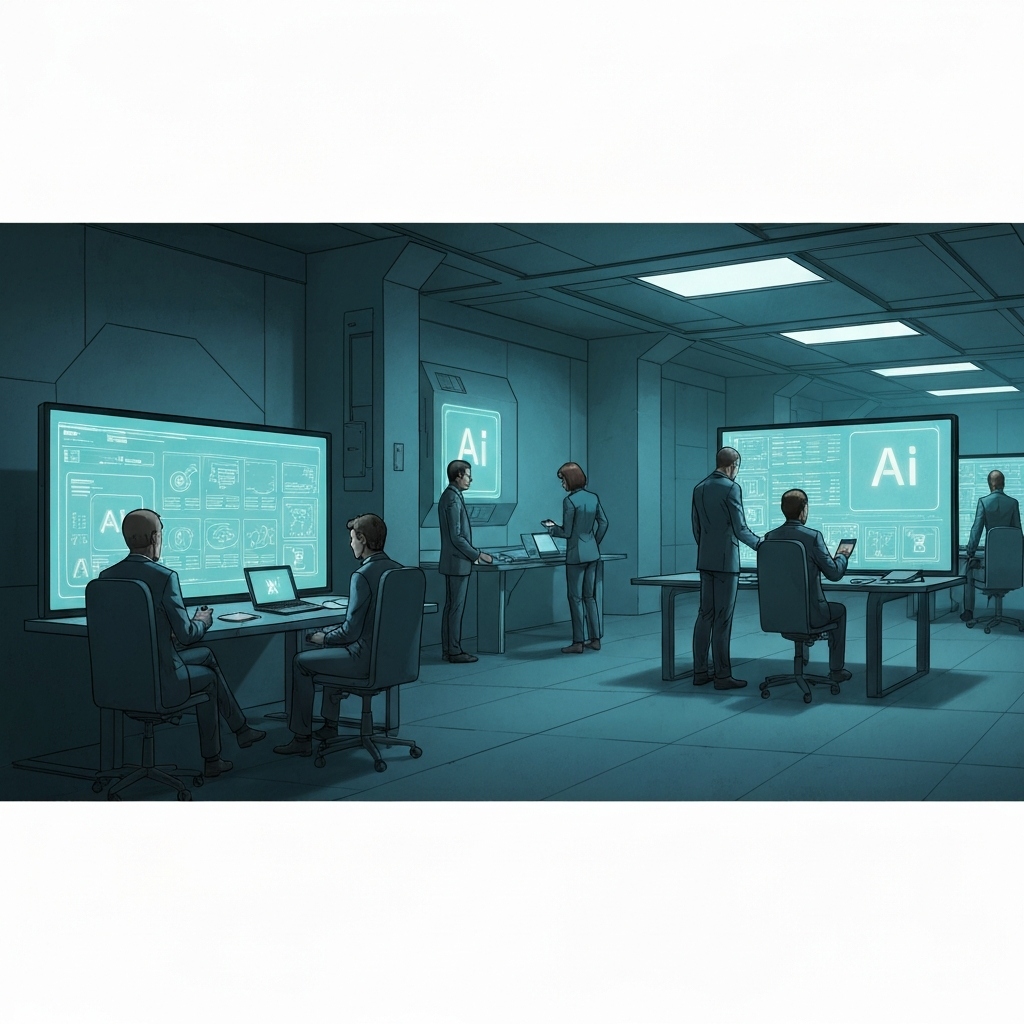
The Commoditization of Creativity: How Generative AI Is Driving Down the Market Value of Creative Services and What Agencies Can Do to Survive.
The ground is shifting beneath the feet of the creative industry. For decades, creative agencies have built their value on a foundation of unique human skills: the ability to craft a compelling sentence, design a visually stunning logo, or conceptualize a groundbreaking marketing campaign. These were specialized talents, honed over years of practice and experience. But a new technological force has arrived, and it's threatening to turn this specialized ground into quicksand. We're talking, of course, about generative AI. This isn't just another tool; it's a paradigm shift, and it’s accelerating the commoditization of creativity at a dizzying pace. What was once scarce and valuable is becoming abundant and, in the eyes of many clients, cheap.
For agency owners, creative directors, and freelance artists, this isn't a distant threat—it's a present-day reality. It’s the client who questions your copywriting fees because “ChatGPT can do it for free.” It’s the marketing manager who balks at a design quote, armed with a folder of “good enough” images from Midjourney. This downward pressure on pricing and perceived value is the central challenge facing the creative world today. But this isn't a eulogy for the creative agency. It's a survival guide. This article will dissect the phenomenon of creative commoditization, explore its real-world impact, and most importantly, provide a clear, actionable blueprint for agencies to not just survive, but thrive in the age of AI.
The Shockwave: Generative AI's Arrival in the Creative Industry
The arrival of generative AI wasn't a slow creep; it was a big bang. Seemingly overnight, tools like ChatGPT, DALL-E 2, Midjourney, and Stable Diffusion went from niche novelties discussed in tech forums to mainstream applications with millions of users. The initial reaction from the creative community was a volatile mix of awe, excitement, fear, and outright hostility. On one hand, the possibilities were intoxicating. Artists could generate endless variations of an idea in seconds. Writers could overcome writer's block with a single prompt. Strategists could brainstorm entire campaigns with an AI partner.
However, the excitement was quickly tempered by a chilling realization. The very tools that promised to augment creativity could also be used to bypass it entirely. The speed and accessibility of these platforms created an immediate and profound disruption. The barrier to entry for producing creative content plummeted. Anyone with an internet connection could now generate a passable blog post, a decent logo concept, or a piece of custom artwork. This democratization of content creation, while celebrated in some corners, sent a shockwave through the professional creative ecosystem. The foundational question quickly became: if anyone can do it, what is our professional service worth?
What is the 'Commoditization of Creativity'?
To understand the path forward, we must first clearly define the central problem. The term 'commoditization' traditionally refers to the process by which goods or services become indistinguishable from one another in the eyes of the consumer, leading to a market where price is the primary, if not sole, differentiating factor. The commoditization of creativity applies this economic principle to what was once considered the un-commoditizable: unique, human-driven creative output.
When Unique Skills Become Commonplace
Think of a skilled trade from a century ago, like a master calligrapher. Their ability to produce beautiful, consistent script was a highly valued and rare skill. Then, the printing press, and later the typewriter and word processor, made their core function—producing legible text—universally accessible. The calligrapher's execution-based skill was commoditized. While a niche market for artistic calligraphy remains, the mass market for text production moved on.
Generative AI is a similar, albeit more complex, force. A graphic designer's technical skill in Adobe Illustrator to create a vector logo, a copywriter's ability to structure a 500-word blog post, or a photographer's talent for capturing a specific type of stock image are all execution-based skills that AI can now replicate at a staggering speed and scale. When the 'how' becomes automated and accessible to everyone, the value shifts away from the mere act of production. The skill that once took years to master is now available on-demand, turning what was once a specialized service into a perceived commodity.
The Perceived Value vs. Actual Value Dilemma
This is the most dangerous aspect of creative commoditization. A client might use an AI tool to generate a logo in 30 seconds. To them, the perceived effort, and therefore the perceived value, is near zero. They then approach a professional designer and are shocked by a quote that reflects hours of research, strategy, audience analysis, competitive review, and iterative design work. The client sees the final product—a logo—and equates it with the AI's instant output, failing to recognize the invisible, high-value work that underpins a truly effective brand identity.
This gap between perceived value (what the client thinks it's worth based on their AI experience) and actual value (the strategic impact of professional creative work) is where agencies are losing ground. Clients are beginning to believe they are paying for the simple execution of a task, a task they can now do themselves. This forces agencies into a defensive position, constantly having to justify their price and explain the intangible, strategic benefits of their work. This is a battle that cannot be won by simply working faster or cheaper; it requires a fundamental shift in how creative services are defined and delivered.
The Real-World Impact: Where Agencies Are Feeling the Pinch
This isn't a theoretical discussion. The financial and operational impact of generative AI is already being felt across all sectors of the creative industry. The pressure is mounting in tangible ways that directly affect revenue, client relationships, and project scope.
Graphic Design and Stock Imagery
Perhaps no field has felt the initial impact more acutely than graphic design. For years, agencies have provided services for social media graphics, blog headers, presentation decks, and basic branding. Now, clients are using tools like Canva, powered by AI image generators, to create these assets internally. The demand for low-to-mid-tier design work is evaporating. Furthermore, the market for stock photography is being upended. Why pay for a license when you can generate a unique, royalty-free image of 'a diverse team collaborating in a futuristic office' with a simple text prompt? This forces designers to compete with a 'free' alternative, making it incredibly difficult to price projects that were once reliable revenue streams.
Copywriting and Content Generation
The world of content is now flooded with AI-generated text. From blog posts and articles to website copy and social media updates, tools like ChatGPT and Jasper can produce human-like text on any subject imaginable. Agencies specializing in content marketing are now facing clients who demand more content for less money, armed with the belief that the writing process has been fully automated. The new request is often to 'just edit the AI output,' a task that can be more time-consuming and frustrating than writing from scratch. This devalues the writer's role, reducing them from a strategic communicator to a proofreader for a machine, and the downward pressure on per-word or per-article rates is immense. According to a Gartner report, the integration of AI into marketing is accelerating, putting further pressure on traditional content models.
Initial Brainstorming and Concepting
Even the initial, high-level creative processes are being impacted. Agencies have always prided themselves on their ability to brainstorm, create mood boards, and develop initial concepts. This is often the most exciting, and billable, part of a project. However, clients can now use AI to generate dozens of campaign ideas, visual styles, and brand names before ever contacting an agency. They may come to the table with a pre-conceived (and often flawed) idea, reducing the agency's role from a strategic partner to a mere execution arm. This robs the agency of the opportunity to guide the project from its inception and apply their deep strategic expertise where it matters most.
The Survival Blueprint: 4 Strategies for Creative Agencies to Thrive
Resisting this technological wave is futile. The only path forward is to adapt and evolve. Agencies that cling to old models centered on pure execution will struggle to survive. Those that strategically reposition themselves will find new opportunities for growth and profitability. Here is a four-part blueprint for thriving in the age of AI.
Strategy 1: Pivot from 'Execution' to 'Strategy and Consulting'
This is the most critical shift an agency must make. You are no longer selling hours spent in Photoshop or writing words in a document. You are selling outcomes, insights, and strategic guidance. Your value is not in the 'what' but in the 'why' and 'how'.
To do this effectively:
- Lead with Research: Start every client engagement with a deep dive into their market, audience, and competitors. Deliver a comprehensive strategic brief as your first deliverable. This immediately frames your work as intellectually rigorous, not just creatively proficient.
- Become a Business Consultant: Don't just deliver a new website; deliver a strategy to increase online leads by 25%. Don't just write blog posts; develop a content marketing engine that drives measurable traffic and conversions. Tie every creative deliverable back to a concrete business objective.
- Offer Audits and Roadmaps: Introduce new service offerings like 'Brand Audits', 'Content Strategy Roadmaps', or 'Customer Experience Analyses'. These are high-value, strategy-first products that AI cannot replicate because they require critical thinking and business acumen. Your expertise becomes the product, not just the creative output.
Strategy 2: Become an AI Integrator and Prompt Engineering Expert
Instead of fighting AI, become the master of it. Clients may know how to use the free version of ChatGPT, but they don't know how to build a sophisticated, customized AI workflow that produces consistently high-quality, on-brand results. This is your new technical advantage.
Here's how to position yourself:
- Develop Proprietary Workflows: Create a 'creative-centaur' process where your team uses a suite of AI tools in a specific, repeatable way to achieve superior results faster. Document this process and present it to clients as your unique 'AI-Augmented Creative Engine'.
- Offer Prompt Engineering as a Service: The quality of AI output is entirely dependent on the quality of the input. Expert-level prompt engineering is a new and valuable skill. Position your team as elite prompt crafters who can coax amazing results from AI that amateurs can't. You can learn more about advanced techniques in our guide to advanced AI prompting.
- Train Your Clients: Offer workshops and training sessions to help your clients' internal teams use AI more effectively. This positions you as an expert guide rather than a threatened vendor and opens up a new consulting revenue stream. You're not just giving them a fish; you're teaching them how to fish with a super-powered AI rod that you built.
Strategy 3: Niche Down into Complex, High-Empathy Services
Generative AI is a generalist. It's great at producing generic content but struggles with nuance, deep subject matter expertise, and genuine human emotion. This is where you can create an unassailable advantage. Instead of being a general-purpose agency, become a specialist in a field that requires a human touch.
Consider niching down into areas like:
- Healthcare and Wellness: This industry requires a deep understanding of patient empathy, regulatory compliance (like HIPAA), and sensitive communication. AI cannot replicate the trust and emotional intelligence needed to create effective healthcare marketing.
- High-Stakes B2B Technology: Marketing a complex SaaS product or industrial machinery requires deep domain knowledge to explain value propositions and technical features. Agencies that can 'speak the language' of a specific industry have a massive advantage.
- Brand Storytelling and Non-Profit Work: Crafting a compelling brand narrative or a fundraising campaign that truly moves people requires an understanding of human psychology, ethics, and emotional resonance. These are areas where AI's soulless optimization falls flat.
Strategy 4: Redefine Your Pricing Model Around Value, Not Hours
If you continue to bill by the hour, you are racing to the bottom. Hourly billing directly ties your income to your time spent on execution, which is the very thing AI is devaluing. You must shift the conversation with clients from your costs to their returns.
Implement new pricing models:
- Value-Based Pricing: Price your projects based on the value and ROI they deliver to the client. If your rebranding project is projected to increase their revenue by $500,000, charging $50,000 is a fantastic investment for them, regardless of how many hours it took you.
- Tiered Project Packages: Offer clear, fixed-price packages for specific outcomes. For example, a 'Brand Launch Package' could include strategy, identity design, and a website for a set fee. This removes the uncertainty of hourly billing and focuses the client on the final product.
- Strategic Retainers: Move away from one-off projects and toward long-term partnerships. Offer a monthly retainer for ongoing strategic guidance, performance marketing, and brand stewardship. This provides you with predictable revenue and solidifies your role as an indispensable part of their team. Explore our post on structuring marketing retainers for more ideas.
The Future is Not AI vs. Human, It's AI + Human
The narrative of 'AI taking creative jobs' is simplistic and misleading. It's not a story of replacement; it's a story of transformation. Generative AI is a tool—arguably the most powerful creative tool ever invented. The agencies that will perish are those that ignore it or see it only as a threat. The agencies that will thrive are those that embrace it, master it, and integrate it into a new, more valuable service model.
The future of creative work lies in the synergy between artificial intelligence and human ingenuity. AI can handle the 80% of repetitive, execution-focused tasks, freeing up human creatives to focus on the 20% that truly matters: strategy, critical thinking, client relationships, ethical judgment, and emotional connection. The creative professional of the future is a 'centaur'—part human strategist, part AI operator. They will be more efficient, more creative, and more valuable than ever before. The commoditization of creativity is only a threat if you continue to sell the commodity. Start selling strategy, start selling expertise, and start selling outcomes. Your human insight is the new scarcity, and in this new world, it is your greatest asset.
FAQ: Navigating the New Creative Landscape
Will AI completely replace creative agencies?
It is highly unlikely that AI will completely replace creative agencies. AI will, however, force them to evolve. Agencies that focus solely on low-level execution (e.g., simple graphic design, basic copy) will be replaced. Agencies that pivot to high-level strategy, AI integration consulting, client relationships, and complex, empathy-driven work will become more valuable.
How can I convince my clients of my value when they can use AI for free?
Shift the conversation from deliverables to outcomes. Don't sell a logo; sell a brand identity that increases market share. Don't sell a blog post; sell a content strategy that drives qualified leads. Showcase the strategic thinking, market research, and deep customer understanding that underpins your work—qualities AI cannot replicate. Use AI output as a starting point to demonstrate how your professional refinement creates a vastly superior and more effective result.
Should I lower my prices to compete with AI-driven freelance platforms?
No. Lowering your prices is a race to the bottom that you cannot win. Instead of competing on price, you must compete on value. Focus on the strategic blueprint: pivot to consulting, become an AI expert for your clients, specialize in a high-value niche, and change your pricing model to reflect the business results you deliver, not the hours you work.
What is the single most important skill for a creative to learn right now?
Beyond their core creative talent, the most important skill is strategic business thinking. Creatives must learn to connect their work directly to a client's business goals, like revenue growth, customer acquisition, or market positioning. The ability to understand a balance sheet, analyze market data, and present creative solutions in the language of business ROI is what will separate successful professionals from commoditized executors.